Showing posts with label Construction Contracts. Show all posts

June 30, 2015

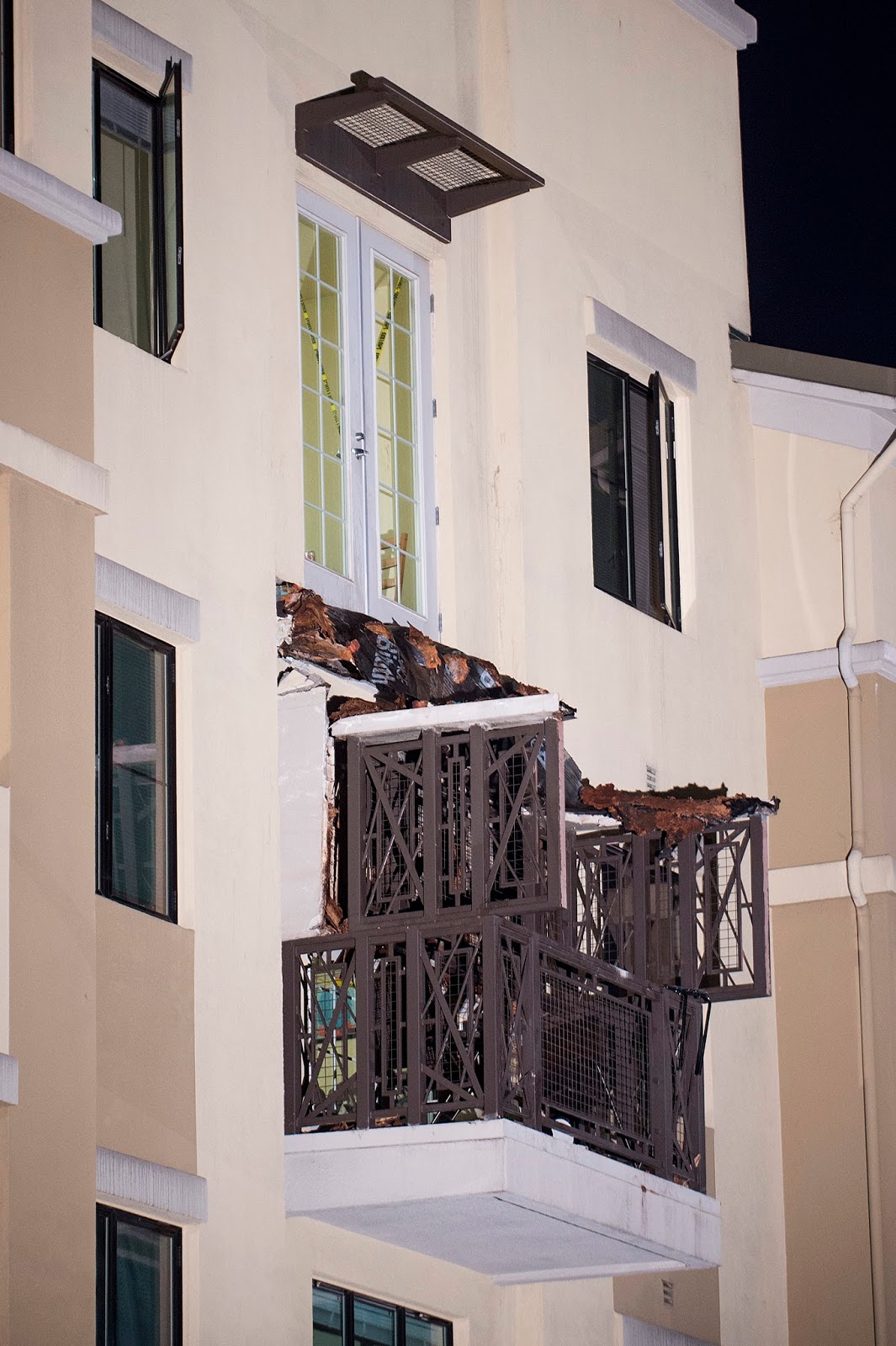
Berkeley Balcony Tragedy

Every day since the apartment building balcony in Berkeley collapsed on June 16th, the L.A. Times has run an article about the tragedy without
providing a definitive explanation for the failure. What caused the supporting joists to rot, resulting in the deaths of six students and critical injuries to the seven others? We have learned that the City inspectors did not red flag any problems with the balcony during the construction of the apartment building. This is not a surprise because city inspectors apparently focus on whether a particular phase of construction has been completed, not whether the construction conforms with the plans and industry standards. In fact, under California law, a contractor does not have a defense in a construction defect case based on the approval of construction by a city inspector. A general contractor or developer would be mistaken if he or she assumed that work was done properly if it passed building inspections by the local department of building and safety. In El Escorial Owners’ Association v. DLC Plastering, Inc. (2007) 154 Cal. App. 4th 1337, 1358, the California Court of Appeal found the defendants (including the general contractor, Alderman Construction, Inc.)were liable for negligence. The Court stated: “Alderman notes that the building inspector approved the work. But that does not change the result. [Firemen’s Ins. Co. of Newark, N.J. v. Indermill (1960) 182 Cal. App.2d 339, 342-343 (building inspector’s approval did not insulate contractor from liability for defective work).]” So what went wrong with the balcony? While the experts try to figure this out, some general observations based on a construction defect case I handled come to mind. A cantilevered balcony is designed to include a waterproofing system. This system has several interrelated components. In the case of the balcony in Berkeley, the construction defects may have included: installation deficiencies of the edge flashing along the perimeter of all decks; failure to properly install deck to wall flashings (i.e., where the balcony is attached to the exterior wall; and/or, the failure to waterproof around handrail post penetrations of the deck membrane. The covering installed on top of the deck may mask these defects. Unless the water came down to the deck through the exterior walls of the apartment buidling, the problems with the deck was due to improper installation of the waterproofing system. It would be very difficult for the owner to perform maintenance on an improperly installed waterproofing membrane and flashing under the deck covering if the defects were not visible. In many instances these problems could be avoided if a contractor would hire a waterproofing specialist to instruct the subcontractor and his employees how to make the building envelope (windows, decks, exterior walls covered by stucco, roof parapets, roof, etc.) "watertight." An article in today's L.A. Times revealed that that decks were inspected within the last year or so in connection with the sale of the property and passed the inspection. However, if the inspection was non-invasive -- if the inspector did not remove part of the deck to expose the rotten joists -- he would have no way of knowing the failure was imminent. As the Court of Appeal held in El Escorial Owners’ Association v. DLC Plastering, Inc., 154 Cal. App.4th at p. 1356, “A case from another jurisdiction reminds us that ‘[s]tructural quality ... is nearly impossible to determine by inspection after the house is built, since many of the most important elements ... are hidden from view.” Add to Technorati Favorites

May 2, 2011

California "Contractor Licensing Laws: the Sword and the Shield"


In my last post I discussed that even though a home improvement contract is required to be in writing, a contractor could recover compensation even if it was not. In such a case, the court will consider the equities -- whether the homeowner will be unjustly enriched if the contractor is not paid -- if the contractor provided labor and materials without obtaining a written contract.

The story is very different if the contractor never had a contractor's license before the labor and materials were provided. A landscaping contractor faced such a dilemma last year in Alatriste v. Cesar's Exterior Designs, Inc. (2010) 183 Cal.App.4th 656. There the contractor began the job without a landscaping contractor's license, but obtained a license from the State Contractors Licensing Board during the course of the project. The homeowner paid $57,500 to the landscaping contractor before it left the job because of non-payment. The homeowner then sued to get his money back from the landscaping contractor on the basis that it was not licensed when it began the project. The Court of Appeal held that the California Contractor's License Law is both a sword and a shield in the hands of a homeowner who has hired an unlicensed contractor.

A person who utilizes the services of an unlicensed contractor is shielded from lawsuits by that contractor to collect payment for unlicensed work by Business & Professions Code section 7031(a). The California Legislature complemented the shield in section 7031(a) by adding a sword that allows recovery of all compensation paid to a contractor for performing unlicensed work. Section 7031(b) provides in pertinent part: a person who utilizes the services of an unlicensed contractor may bring an action in any court of competent jurisdiction in this state to recover all compensation paid to the unlicensed contractor for performance of any act or contract.

The landscaping contractor in Alatriste v. Cesar's Exterior Designs, Inc. made several arguments that the Court of Appeal rejected: the homeowner knew it was unlicensed when it began the job; the homeowner would be unjustly enriched; and some of the labor and materials were provided after the landscaper was licensed. This was a case where the five letter synonym for justice applied: "tough."

The Court of Appeal followed a line of California cases which have held that section 7031 embodies an “all-or nothing” philosophy aimed at deterring persons from offering or providing unlicensed contractor services for pay. Section 7031 does not permit an unlicensed entity to recover partial compensation by narrowly segmenting the licensed and unlicensed portions of their performance. Where applicable, section 7031 bars a person from recovering or retaining compensation for any work performed in connection with an agreement for services requiring a contractor's license unless proper license was in place at all times during such contractual performance. In Alatriste v. Cesar's Exterior Designs, Inc. , the landscaping contractor even had to refund the money paid for materials retained by the homeowner!

The story might have had a happier ending for the landscaping contractor if it previously had a license which expired and which was being reinstated. But that will have to be the subject of another post.


Add to Technorati Favorites

April 25, 2011

The Tale of a Home Improvement Contract -- What If It is Not in Writing?


Business and Professions Code section 7159 requires that a home improvement contract be in writing. However, in a series of cases dating back to 1980, the Court of Appeal has judicially created an exception to this statute based on the sophistication of the homeowners and whether they would be unjustly enriched if the contractor is not paid. The most recent example of this is Hinerfeld-Ward, Inc. v. Lipian (2010) 188 Cal.App.4th 86. There the Court of Appeal affirmed a judgment by trial court which enforced an oral agreement between the general contractor and the homeowners. The homeowners failed to show they were the type of persons who came within the protection of section 7159 for three reasons: the project was a complex, high-end remodel on which the design continued to evolve over the years of planning and construction; the owners' architect and designer had extensive involvement in the project as their representative; and the owners would be unjustly enriched if contractor was denied recovery. The contractor recovered approximately $202,000 that the homeowners had failed to pay.

To make matters worse for the homeowners, the homeowners had to pay the contractor's attorney's fees ($200,000) and 2% per month of the progress payments withheld (more than $54,000) because the homeowners violated Civil Code section 3260.1, a statute which governs withholding of progress payments on a construction contract. The violation resulted from the homeowners withholding an amount exceeding 150% of the disputed amount from progress payments to the contractor.


Add to Technorati Favorites

January 5, 2011

California Real Estate Licensing Cases -- 2010


In California, a person acting as a real estate broker without a license cannot recover for services for which a license is required. For example, if a CPA acts as a property manager without a real estate license and collects rents, he may be required to disgorge his management fees even if his services were impeccable. Likewise, a company that arranges financing for real estate is normally required to have a real estate broker's license. But in two cases reported in 2010, the California Court of Appeal held that a person could recover for property management and services to arrange a credit facility for a "bridge" lender to the extent a license is not required to perform the services for which they sought compensation.

In MKB Management, Inc. v. Melikian (2010) 184 CA 4th 796, the plaintiff entered into a property management agreement with the owner of several apartment buildings. The Court of Appeal held that the trial court erred in finding that a property management agreement that called on plaintiff to perform multiple services, some of which required a broker’s license and some of which did not, could not be severed as a matter of law. Even if entire contract was illegal and unenforceable, plaintiff could still recover the reasonable value of services rendered provided that those particular services were not legally prohibited. Similarly, plaintiff’s lack of a contractor’s license would preclude recovery of compensation for acts that require license but not for those actions for which such a license was not required.

In Greenlake Capital, LLC v. Bingo Investments, LLC (2010) 185 CA 4th 731, the Court of Appeal relied on MKB Management, Inc. v. Melikian in holding that a finance company's lack of a real estate broker's license did not bar the company from recovering compensation for indentifying and procuring a credit facility for a lender under a contract to assist in obtaining financing. The contract did not have as a central purpose the provision of illegal services and the parties do not intend at the outset that the financing would take a form that would necessarily violate the license requirement.

So what is the moral to the story of these cases? Get a real estate broker's license (or another appropriate license) if you will be performing services for which a license may be required. But if you don't have a license, read the two cases cited above and argue that some or all of the services for which compensation is sought do not require a license.


Add to Technorati Favorites

May 3, 2009

LAW ON THE WEB -- A California Law Library Compliments of King Hall School of Law, UC Davis


I graduated from the UC Davis School of Law in 1977. We had one of the first computer terminals in the country that accessed a new service for legal research called Lexis. But for the most part, we did legal research the old fashioned way using law books in our extensive Law Library.

Recently I visited the website for UC Davis School of Law and found a free California law library available on line entitled, "Law on the Web." For lawyers and non-lawyers alike, it is worth a visit by clicking here.

Add to Technorati Favorites

August 29, 2008

ARBITRATION -- Revisited and Reviewed


This Blog recently criticized non- judicial arbitration because, among other problems, the arbitrator can render a binding award without following the applicable law. The California Supreme Court has ruled that the parties may agree by contract to avoid this pitfall.

In the recent case of Cable Connection Inc. v. DIRECTV, 2008 DJAR 13491, the Supreme Court held that parties to an arbitration agreement can agree in advance to judicial review of legal mistakes by the arbitrator. This is significant because many people sign arbitration provisions in this State unaware that arbitrators are not required to follow the law. For example, an arbitration provision is standard in the commonly used California Association of Realtor's form Purchase Agreement for residential real estate. If both parties initial the arbitration provision, they have agreed to binding arbitration without judicial review for legal mistakes.

Justice Carol Corrigan writing for the majority in Cable Connection Inc. v. DIRECTV explained that judicial review of an arbitrator's decision will still ease the pressure on California's trial courts. "The judicial system reaps little benefit from forcing parties to choose between the risk of an erroneous arbitration award and the burden of litigating their dispute entirely in court. Enforcing contract provisions for review of awards on the merits relieves pressure on congested trial court dockets."

What can you do to preserve the right to judicial review of an arbitrator's award. First, you must have appropriate language in the agreement to arbitrate. The provision in Cable Connection Inc. v. DIRECTV read: "The arbitrators shall not have the power to commit errors of law or legal reasoning, and the award may be vacated or corrected on appeal to a court of competent jurisdiction for such error."

Second, there must be a record made in the arbitration that is reviewable by a court. Often times awards in arbitrations merely something like, "Claimant is awarded $________ against respondent, plus costs." At the very least, a party should request a "reasoned decision" by the arbitrator in a form similar to a Statement of Decision that is issued by the Judge in a Superior Court trial. Because without a "reasoned decision" there may be nothing to review.


Add to Technorati Favorites

May 22, 2008

CONTRACTOR'S STATE LICENSE LAW -- When Is Ignorance Bliss?


A few months ago, I was retained to draft a construction contract by a client who is building a house in my area. During this assignment, I checked the website of the California Contractor's State License Board to see if the general contractor selected by my client was licensed. The contractor did not have a license in the name of his corporation and did not have worker's compensation insurance. My client selected another contractor who had a license and insurance.

A recent Court of Appeal case, Great West Contractors, Inc. v. WSS Industrial Construction, Inc. (2008 Cal. App. LEXIS 627) provides a good overview of the circumstances under which a licensed contractor can be denied any payment for its work. In that case a steel subcontractor sued the general contractor for labor and materials it provided for a school. The steel subcontractor ("WSS") was not licensed when it bid the job, did preliminary work under the subcontract (preparing plans and ordering materials), and began to invoice the general contractor. WSS became licensed before the subcontract was signed by both parties and before it did the lion's share of its work under the subcontract.

The Court of Appeal reversed a ruling by the trial court in favor of WSS, holding: "With one exception, the [Contractor's State License Law] forbids a contractor from recovery -- in law or equity -- on an otherwise valid claim for performance of any service for which a license is required if the contractor was unlicensed at any time during performance of the work." (Emphasis added.) This "bright line" test requires contractors to be licensed at the commencement of its services. If the contractor is aware of the problem and fixes it during the project, it is a case of "too little, too late."

But as the Court of Appeal said in that case, there is a statutory exception which is subject to interpretation by California courts. Under Business & Professions Code section 7031(e), a contractor can recover money in a civil action if it proves there has been "substantial compliance" with the licensure requirements: (1) the contractor had been duly licensed in this state prior to the contract or act; (2) it acted reasonably and in good faith to maintain proper licensure, (3) and did not know or reasonably should not have known that it was not licensed. This means that a contractor with an expired license can recover for work done without a license if a court finds that its ignorance of the law and the facts was excusable -- even if the excuse is a weak one. See, e.g., ICF Kaiser Engineers, Inc. v. Superior Court (1999) 75 Cal. App. 4th 226 (the appellate court excused Kaiser from compliance with the licensing law because it was a large company and could not be expected to keep abreast of developments that resulted in the suspension of its license). This is a case where ignorance was bliss.

But the owner who contracts with an unlicensed contractor is unlikely to achieve a state of bliss if a worker is injured on the job. Assuming the unlicensed contractor does not have worker's compensation insurance (a likely state of affairs), the injured worker may be deemed an employee of the owner. Labor Code section 2750.5. A possible consequence is that the unlicensed contractor who is injured on the job will make a worker's compensation or personal injury claim against the owner. This is a case where ignorance will not be bliss -- an owner should determine if a contractor is licensed and has worker's comp insurance before he or she signs a construction contract.

To read a recent Los Angeles Times article about the problems that can be created by hiring an unlicensed contractor, click here.


Add to Technorati Favorites